Hiển thị các bài đăng có nhãn historical. Hiển thị tất cả bài đăng

Thứ Bảy, 18 tháng 6, 2016

the Grey Ghost Pontiac Tempest began life as the daily driver of the wife of Pontiac's special projects engineering manager, then it became a track monster that consistently nipped the heels of the newest SCCA cars, and best drivers


a fan favorite in the 1971 Trans Am series was the "Grey Ghost", a '64 Pontiac Tempest, prepared by Pontiac Special Projects Engineering Manager Herb Adams and a group of his young proteges (Tom Nell/Jeff Young-Engines, Joe Brady/Harry Quackenboss-Chassis, Ted Lambiris-Body, Tom Goad-Logistics).

The boxy six-year-old Tempest had once been Adams' wife's daily driver, with over 80,000 miles (130,000 km) on the odometer when it was turned into an A Sedan racer. It proved to be surprisingly fast, at a time when even a one-year-old car was considered out of step with the competition.

Using his own money, Herb Adams set about converting Mrs. Adams grocery getter into a competitive race car. Using a 389 destroked to a Trans-Am regulation friendly 303 cubic inches (producing a whopping 475hp), Adams and his skeleton crew added larger tires on the front, a few degrees negative camber on the rear to make the big Tempest hook up a little better in the corners, and a fresh coat of dull silver paint. To drive their beast, Adams convinced the hard charging Bob Tullius.

It was entered in the opening round of the 1971 Trans-Am Championship. Unable to qualify, the car was allowed to start from the back of the pack. With Bob Tullius behind the wheel, it mowed through the field, and was running second behind eventual winner Mark Donohue's factory-supported Penske Racing AMC Javelin when the engine expired.

https://en.wikipedia.org/wiki/Trans-Am_Series#Beginnings_.281966.E2.80.931967.29

Herb Adams:
We had gained a lot of knowledge especially about chassis development from the 70 SCCA season. They (Pontiac) would not give us any parts but at least by then we knew what to get. The car was a joke to them (the other race teams) until we were running in second place right up until the end, then we blew a head gasket. We were chasing down Donahue at the time. We did some things that they laughed at. Like, we ran big tires on the front because the car was nose heavy. It turned out that in the rain the car was really, really competitive. Bob Tulius was the driver. He had a lot of experience driving in the wet. So every time it rained we did really well. It was also competitive in the dry. We usually ran in the top five.

http://www.pontiacsonline.com/Herb%20Adams.htm
http://hooniverse.com/2011/06/13/morning-qualifying-paranormal-activity-edition/
http://www.luishernandezjr.com/2015/08/book-review-blood-sweat-gears-story-of.html

Doesn't this mean it was the seminal beginning of the Optima Street Car type of car? I believe so

there is even a book about it:

Thứ Tư, 15 tháng 6, 2016


sold for  $1,292,500 in March 2013


This is one of seven cars built by LeBaron with what is called a “Barrelside” body. Despite having a second windscreen, this is the only car that does not have an elongated rear cowl.

What’s even cooler is that in 1932 this car owned by prominent Hollywood agent Phil Berg - was stripped of its fenders and a number of other pieces to race a Mercedes-Benz SSK owned by two of the Marx Brothers, Zeppo and Chico. Not just a Friday night grudge match, the race was held at the Muroc dry lake in California for a reported $25,000 booty.

By the time the starter’s flag dropped, more than a thousand spectators were on hand. Invited guests numbered about 200 and included Hollywood royalty such as Clark Gable, Gary Cooper, Carole Lombard, and Mae West. The Duesenberg won the race at the hands of stock-car Ace and Auburn test driver Eddie Miller.

http://cars.girlstalkinsmack.com/cars_motorbikes/rm-auctions-of-may-2013-(part-2).aspx
http://justacarguy.blogspot.com/2013/06/did-i-ever-post-about-marx-brothers.html
http://oldschooliscool.tumblr.com/

Thứ Bảy, 4 tháng 6, 2016

Plymouth orchard tractor, rare, and exceedingly well photograghed for a tractor.


The only Orchard model of the 214 Plymouth tractors built, it’s literally one of a kind, but that’s not it’s real claim to fame. Instead, that comes from the fact that it was the first tractor to be designed for use with rubber tires instead of the studded steel wheels used before.


http://uncrate.com/stuff/plymouth-orchard-tractor/
https://www.mecum.com/lot-detail/GL0616-251565/0/Plymouth-Orchard/

It was bought by the small tractor collection I just posted last month,  http://justacarguy.blogspot.com/2016/05/stonegate-farm-orchard-tractor.html

Thứ Ba, 10 tháng 5, 2016

Otto Meyer traction engine/locomobile/road trains and the world's largest plow, last built in 1957, last commercial use 1972 (color video).... Was used to plow deep into moor lands and bogs. The extra wide wheels, and cat track, were to keep the farm equipment from sinking in due to the enormous weight of the tractors, and the digging force of the 6 foot deep plow


the weird thing is that the enormous tractors don't haul the plow... they winch it. In the photo above you can see the cable. The tractors were on either side of the field being plowed, and the plow was pulled by the cable from one side to the other. The plow was bladed on either side of the center wheel, and would teeter totter to cut into the turf in one direction at a time

A complete unit consisted of four steam traction engines, (also known as locomobiles) pulling one tipping plow at each one side. There was one big cable reel attached under every locomobile.

The plow was led by the cable and pulled from the left side of two locomobiles towards the right of the other 2 creating a big “X”- shape with the plow in the middle. The lateral distance between the two locomobiles could get quite big and was only limited by the cable length. After every run of the plow, the locomobiles moved forward by the desired furrow width. The cable gear system was developed by Mr Max Eyth.

A direct use of the Locomobile pulling a plough was not possible due to the condition of the ground and the high weight of the tractors

Between 1950 and 1970 the bog areas of the Emsland district were cultivated, they had been determined to be uninhabitable from the 1700s on, but with the invention of the deep plow to get the peat bog from under the sandy topsoil, the next 20 years were undertaken to plow up the North West of Germany, 5 counties, 12 hours a day, 6 days a week, from Easter to October.

The Emsland Plan covers the region of the entire North-West Germany and the counties Ostfriesland Leer, Cloppenburg, Bersenbrück and Bentheim


The traction engines (TE's) are positioned on both sides of the field, the TE's are used as a winch to pull the double sided plough two meters deep through the soil. They needed to go that deep to get the deeper peat mixed with the topsoil for better fertilizing.

The TE's were built in 1953 by Wilhelm Otto Meyer. They are two cylinder high pressure engines who have an operating pressure of 20 bar. Each TE has 500Hp. The engines are able to provide the huge amounts of torque needed to get the plough moving.


https://www.facebook.com/groups/413414438697407/permalink/1046735788698599/?comment_id=1047197445319100&notif_t=group_comment&notif_id=1462856775549072


This is the Emsland Moor Museum in Geeste Germany, opened in July 2010. Coincidentally, the Director General of the German Historical Museum in Berlin, Professor Hans Otto Meyer is the great-grandson of the Otto Meyer that repurposed the 1919 steam engines by doubling their horsepower, and using them to winch the plow across the moors.


Above, "Thuringia" and "Magdeburg", below "Mammoth"


http://modelsteam.myfreeforum.org/archive/large-plow-with-two-traction-engines__o_t__t_40655.html
http://www.metallus.de/downloads/Lokomobile-Flyer-ENG.pdf


Traction Engines and Other Steam Road Engines, by Derek Rayner


the only remaining example I can find online, is at the Emsland Moor Museum in Germany, consisting of the deep plow "Mammoth", and just two traction engines.


http://www.noz.de/lokales/geeste/artikel/710727/neues-buch-im-geester-moormuseum-vorgestellt#gallery&0&0&710727
http://moormuseum.de/museum-ausstellungshalle/

http://www.noz.de/deutschland-welt/politik/artikel/28258/als-ein-mammut-das-emsland-umpflugte#gallery&0&2&28258

there is also a book recently published (I can't find info online) about the moors, the collection "Moor Tide" Publisher Dirk Roese and the Emsland Moor Museum presented in Geeste the book to the public, with over 300 stories, from 54 authors have been recognized in the 370-page book.

The moors near Bargerveen, were, in the 19th century, the largest contiguous moor in northern Europe

http://www.panoramio.com/photo/7253968

Thứ Ba, 5 tháng 4, 2016

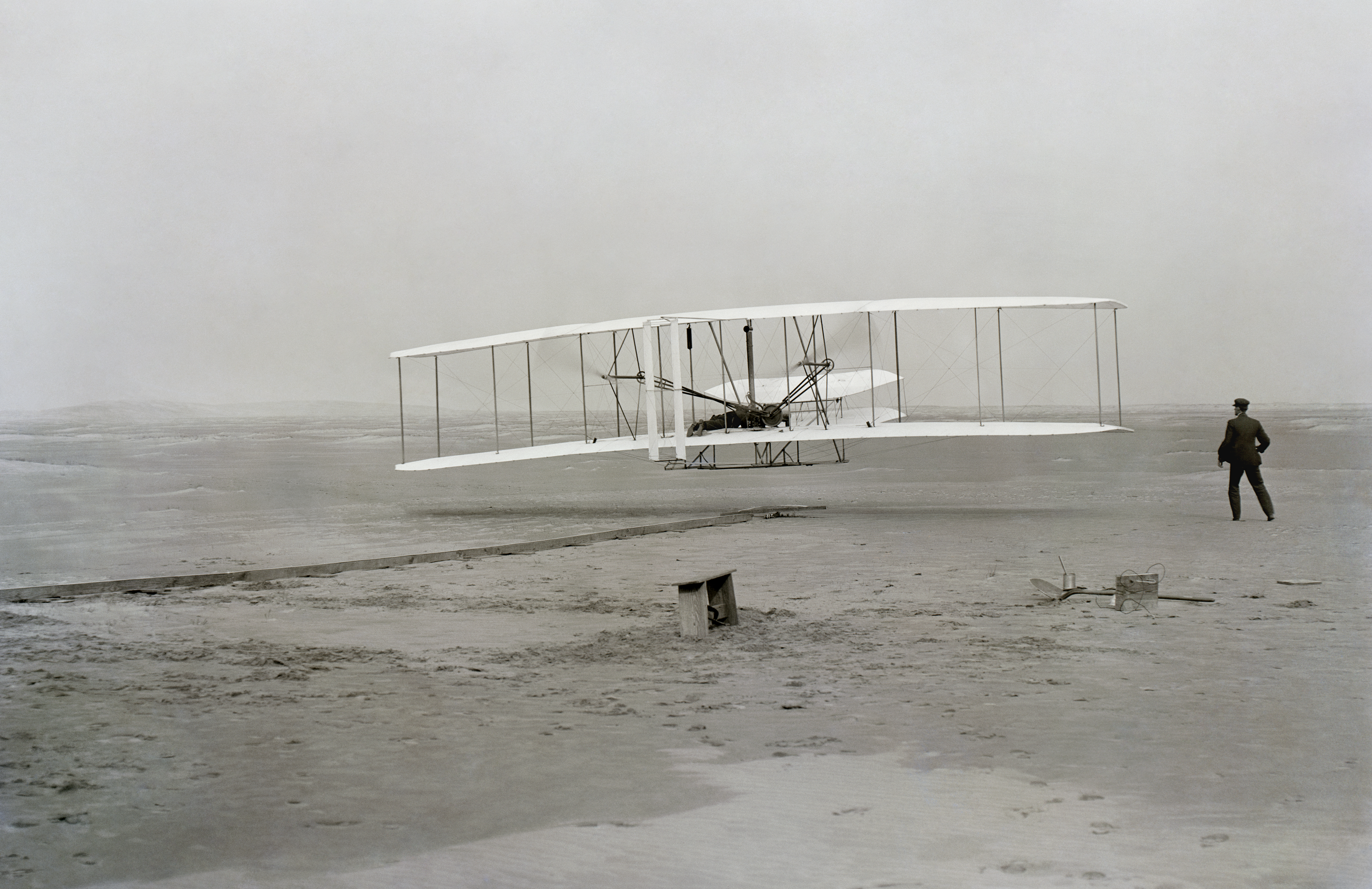
The patent file for the Wright Brothers' 'flying machine' has been rediscovered 16 years after it was noticed missing, 36 years since it's last known whereabouts


Record keepers realised the file was missing from the US National Archive in 2000, The Washington Post reported. Other important missing documents include the patent for Eli Whitney's cotton gin as well as hand-written letters from Abraham Lincoln and photos from the moon.

But volunteer archivist Bob Beebe tracked down the file last month, hidden among 15ft-high (5 metre) stacks of documents in a limestone special records storage cave in Lenexa near Kansas City, meaning the Wright Brothers parent was misfiled rather than completely lost or stolen.

In 2012, the US' National Archives was hit by a rash of robberies, with priceless items presumed stolen by Barry Landau, a conman who had amassed the largest collections of stolen American artifacts ever.

Landau managed to steal more than 10,000 historical items by impersonating a presidential historian. His collection included the original reading copy of Franklin D. Roosevelt's famous 1937 inaugural address as well as documents signed by George Washington, Thomas Jefferson, Voltaire, Mark Twain, and Charles Dickens.

 In 2012, a former Archives emplyee was arrested for stealing nearly 5,000 items, including one of the original news recordings chronicling the Hindenburg disaster.

http://www.dailymail.co.uk/sciencetech/article-3522465/Missing-patent-file-Wright-Brothers-flying-machine-CAVE-vanished-36-years-ago.html
http://www.thewire.com/national/2011/10/national-archives-would-these-priceless-artifacts-back/43318/
https://upload.wikimedia.org/wikipedia/commons/8/86/First_flight2.jpg

Thứ Hai, 4 tháng 4, 2016

The Jefferson Highway, the Pine to Palm road from Winnipeg to New Orleans, the first international highway traversing the United States from north to south through the Mississippi Valley

Early partisans of motoring sought to link together existing roads and then make them fit for automobile driving—blazing, marking, grading, draining, bridging, and paving them.

 The most famous of these named highways was the Lincoln Highway between New York City and San Francisco. 

The highway was planned to be economically beneficial to the region's farmers.

By early 1916, a proposed counterpart coursing north and south from Winnipeg to New Orleans had also been laid out.  

Despite their importance, the old
 named auto ‘trails’ are largely forgotten. 


the Jefferson Highway Convention will be on April 29th and 30th, 2016. in Carthage, MO http://www.jeffersonhighway.org/

http://www.uiowapress.org/books/2016-spring/jefferson-highway.htm

https://www.facebook.com/Jefferson-Highway-129069972974/

Other major North/South routes include-
♦ Atlantic Highway
♦ Dixie Highway (Sault Ste. Marie, Michigan, to Miami)
♦ Pacific Highway
♦ Evergreen Highway (Portland, Oregon, to El Paso)
♦ Jackson Highway (Chicago to New Orleans)
♦ Jefferson Highway (Winnipeg to New Orleans)
♦ King of Trails Highway (Winnipeg to Brownsville, Texas)
♦ Meridian Highway (Winnipeg to Houston)
♦ National Park-to-Park Highway (looped through the National Parks of the West)

Shorter highways-
♦ Blue Pole Highway (Chadron to Fremont, Nebraska)
♦ Colorado to Gulf Highway (Denver to Galveston)
♦ Custer Battlefield Hiway (Des Moines to Glacier National Park in Montana)
♦ Mohawk Trail (Greenfield, Massachusetts, to Schenectady, New York)
♦ William Penn Highway (New York City to Pittsburgh)
♦ Pershing Way from Winnipeg to Lafayette, Louisiana, (named after the hero of World War I, General John J. Pershing)
♦ Three C Highway (Cleveland, Columbus, and Cincinnati, Ohio)

Historic trails of the past-
♦ The Old Oregon Trail
♦ SantaFe Trail

Looks like a smooth flight, but landing is going to really ruin his day

Thứ Tư, 30 tháng 3, 2016

the Griswold, built by Howard Griswold after completing correspondence courses in electrical and mechanical engineering in 1902-03


Howard Griswold (1878-1955) built this for the president of Columbus Railway, Power and Light Company, Robert E. Sheldon. Howard is seated in the driver’s seat next to his wife, Cora 

Thanks Steve!

Thứ Ba, 29 tháng 3, 2016

When stupid women's fashions went out of style, it was usually due to modern inventions


Hoops had to be removed before taking a seat in a carriage or trolley. They were hooked on the back of the vehicle.

The other idiotic fashion thing was the huge hats that kept people in theaters behind them from seeing the movie screen or actors.

https://www.facebook.com/groups/834204169970608/

Bài đăng phổ biến